10 Growth Goals to Master in Leadership & Management

Free Printable Download

Download the free printable version of this resource and start putting your goals into action. Simply scroll to this bottom of the page to download.

Share

Free Resource · Leadership & Management

10 Growth Goals to Master

Leadership & Management

Future-proof your career. Build skills that are genuinely difficult to replace.

A free resource from Goal Machine by Darren Whitaker-Barnett

Introduction

Purpose

Ten growth goals for leaders and managers who want to build the capabilities that outlast any role title — with daily practices that develop the coaching, strategic, and cultural leadership skills that become more valuable as the world becomes more complex.

Daily Practice 90 Days Mastery

The Principles They Serve

Competence (Am I getting better?) and Law 2 (What you do daily becomes what you achieve repeatedly) are the primary architecture. Direction and Why are present throughout — growth goals require a clear destination and a personal reason strong enough to sustain 90 days of deliberate daily practice.

Direction
GOAL-SETTING THEORY
Why
IKIGAI
How
KAIZEN
Competence
SELF-DETERMINATION THEORY
Recognition
COGNITIVE EVALUATION THEORY
Introduction

From the Author

I have watched fast-moving companies lose their momentum — not to better competitors, not to market shifts, but to the systems that replaced the ones that made them grow in the first place.

The pattern is consistent enough to be instructive. A company is acquired. Growth that was compounding at forty or fifty percent year on year slows to a fraction of that within eighteen months. From the outside, it looks like the market changed, or the product matured, or the founders left. Those things may all be true. But they are rarely the cause. The cause is almost always the same thing: a performance system that was designed for a different kind of organisation was imposed on one that had been built to move fast.

Goals appeared — often well-structured on paper. But they arrived from above, shaped by corporate priorities that employees could not connect to their own work or their own reasons for being there. The Why was missing. Or worse, it was present in language but absent in meaning: vision statements that said the right things and meant nothing to anyone in the room. Goal-setting became a compliance exercise. People filled in the forms. Managers signed them off. Nobody believed that what got written down in February would be noticed in December.

And it was not noticed. Recognition — the signal that tells people their effort matters — defaulted to the annual review cycle, disconnected from the daily work it was supposed to reinforce. What gets recognised gets repeated. When recognition is absent, the lesson people learn is simpler: it does not matter.

What I learned across my own career — on rugby fields, in insurance offices, in boardrooms, and across the forty-two countries where my own company established its footprint — is that great leadership is not a personality type. It is a set of practised disciplines. Coaching rather than directing. Thinking beyond the current quarter. Creating the conditions where people discover what they are capable of, rather than simply what they are told to do. Those disciplines are learnable. And when the system around them is designed deliberately — when Direction, Why, How, Competence, and Recognition are all present and connected — performance stops being a function of individual effort and starts being a predictable output of the environment. This resource is about building that environment, one leadership capability at a time.

— Darren Whitaker-Barnett

The New Reality

The New Reality for This Function

Leadership roles are not immune to disruption. Middle management layers are being compressed as AI tools provide more direct performance visibility. Remote work has reduced the value of proximity-based leadership. Shareholders under EBITDA pressure are scrutinising leadership headcount carefully. The leaders who remain genuinely irreplaceable are those who develop people in ways that tools cannot, build cultures that outlast their presence, and make strategic judgments in conditions of genuine uncertainty.

These ten growth goals develop the leadership capabilities that become more valuable as the environment becomes more complex. They cannot be automated, they cannot be offshored, and they improve with every year of deliberate practice.

These are not performance goals — goals to help you do your current job better. They are growth goals: skills to develop that compound over time, make you genuinely difficult to replace, and open doors that narrow for those who do not build them. Each one requires human judgment, improves with experience, and cannot be easily automated or offshored. The daily practices are designed to fit a working life — 15 to 30 minutes each day, consistently applied over 90 days, creates measurable progress toward mastery.

The 10 Growth Goals

Leadership & Management

01
Competence

Coaching as a Leadership Practice

01 / 10
Why Master This Now

Leaders who coach — who ask rather than tell, who develop capability rather than direct activity — build teams that perform better, grow faster, and need less management over time.

What Mastery Looks Like

You use a coaching approach in at least 60% of your leadership interactions, have a recognised coaching methodology, and can demonstrate measurable development in the people you lead.

Daily Practice
  • Before every one-on-one this week, write down one coaching question rather than one piece of advice — practise the discipline of asking before telling.
  • Spend 20 minutes each morning on your coaching training, methodology, or practice — the skill requires deliberate development, not just good intentions.
02
Direction

Strategic Thinking and Horizon Planning

02 / 10
Why Master This Now

Leaders who can think three to five years ahead — identifying trends, imagining scenarios, and positioning their teams for a future that has not yet arrived — are the ones who create durable competitive advantage.

What Mastery Looks Like

You regularly scan the horizon in your industry, can articulate two or three plausible futures for your function and build plans that are robust across scenarios.

Daily Practice
  • Spend 20 minutes each morning reading about industry trends, adjacent technologies, and strategic developments — not news, but signal.
  • Write one scenario for your function's future each month — what would it look like if the most disruptive trend accelerated? What would you do differently today?
03
Why

Psychological Safety and Team Climate

03 / 10
Why Master This Now

Teams with high psychological safety learn faster, surface problems earlier, and innovate more effectively. Building this climate is a deliberate leadership skill, not a personality trait.

What Mastery Looks Like

You can assess the psychological safety level of any team you lead accurately, identify the specific leadership behaviours that are limiting it, and implement targeted improvements.

Daily Practice
  • After every team meeting, assess one aspect of psychological safety: did people speak up, disagree, or admit uncertainty? What did your behaviour encourage or prevent?
  • Study one psychological safety research concept each week — Amy Edmondson's work is the foundation — and apply one specific leadership behaviour change.
04
Competence

Leading Through Uncertainty and Ambiguity

04 / 10
Why Master This Now

The conditions in which leadership is most needed are the ones in which it is most difficult: when the path is unclear, the stakes are high, and the team is looking for signal. Leaders who can navigate ambiguity with confidence and composure are irreplaceable.

What Mastery Looks Like

You can hold your team's focus and motivation during periods of genuine uncertainty, make decisions with incomplete information without paralysis, and communicate ambiguity in a way that builds confidence rather than anxiety.

Daily Practice
  • When you face an uncertain decision this week, write down the three most important things you know, the three most important things you do not know, and the decision you would make today given both.
  • Study one framework for decision-making under uncertainty each quarter and apply it to a real decision. The discipline of structured thinking under pressure develops composure.
05
Competence

Cross-Cultural and Global Leadership

05 / 10
Why Master This Now

As organisations become more globally distributed and culturally diverse, the ability to lead effectively across cultures — to adapt communication, build trust across difference, and create belonging across distance — becomes a core leadership capability.

What Mastery Looks Like

You lead cross-cultural teams or relationships with demonstrable effectiveness, adapt your leadership approach to different cultural contexts deliberately, and are sought out to lead global or cross-cultural initiatives.

Daily Practice
  • Study one cultural dimension or cross-cultural leadership concept each week — Hofstede, Meyer's Culture Map, or specific country context relevant to your team — and apply it to one real interaction.
  • After every cross-cultural interaction, reflect: what assumption did I bring in that may not have been shared? What did I learn about how this person or culture works?
06
Direction

Financial Literacy and Business Case Leadership

06 / 10
Why Master This Now

Leaders who understand the financial implications of their decisions — who can build a business case, read a P&L, and present investment decisions in commercial terms — operate with a fundamentally different kind of credibility.

What Mastery Looks Like

You can build a credible business case for any significant leadership decision, read and interpret your organisation's financial statements, and present resource requests to leadership in terms that connect directly to business outcomes.

Daily Practice
  • Spend 20 minutes each morning on financial literacy — P&L interpretation, unit economics, business case construction — relevant to your leadership context.
  • Build a business case for one decision you are currently making — even if approval is not required. The discipline of financial justification sharpens leadership thinking.
07
Recognition

Inclusive Leadership and Belonging

07 / 10
Why Master This Now

Teams where people feel they genuinely belong — where difference is valued rather than tolerated, and where everyone has a fair opportunity to contribute and be recognised — consistently outperform those where they do not.

What Mastery Looks Like

You can measure belonging in your team accurately, identify the leadership behaviours that are creating or limiting it, and implement specific changes that improve inclusion and the performance outcomes that follow from it.

Daily Practice
  • Review your recognition patterns each week: who have you noticed, who have you overlooked, and what does the pattern tell you?
  • Study one inclusive leadership practice each month and implement it deliberately — not as a policy, but as a change in your own behaviour.
08
Why

Storytelling and Narrative Leadership

08 / 10
Why Master This Now

The leaders who move organisations are the ones who can tell a story. Not a presentation — a narrative that makes the destination feel worth reaching and the journey feel worth starting.

What Mastery Looks Like

You can craft and tell a compelling narrative around any strategic direction, organisational change, or leadership challenge — in a way that connects emotionally, creates meaning, and generates commitment rather than compliance.

Daily Practice
  • Write one leadership story each week — a specific experience, what happened, what it meant, what it tells us about where we are going. Build your narrative library.
  • Before every significant leadership communication, ask: what story does this need? Not: what information does this need to contain?
09
Competence

Digital Leadership and Technology Judgment

09 / 10
Why Master This Now

Leaders who understand how technology is reshaping their function — who can evaluate AI tools critically, make informed technology decisions, and guide their teams through digital change — are becoming the standard, not the exception.

What Mastery Looks Like

You can assess the technology landscape relevant to your function with confidence, make or influence technology decisions with commercial and operational judgment, and lead your team through digital change without outsourcing your thinking to IT.

Daily Practice
  • Spend 20 minutes each morning reading about technology developments relevant to your function — not general AI news, but specific applications to your industry and role.
  • Evaluate one technology tool or platform relevant to your function each month: what problem does it solve, what does it cost, what does it require, and what would success look like?
10
Direction

Legacy and Succession Thinking

10 / 10
Why Master This Now

The measure of a great leader is not what they achieve while they are present — it is what the organisation can do after they have gone. Building succession, developing the next generation of leaders, and creating systems that outlast any individual is the highest form of leadership.

What Mastery Looks Like

You have identified and are actively developing at least two potential successors for your role, have a documented plan for their development, and have built at least one organisational capability that will outlast your tenure.

Daily Practice
  • Identify the two people in your organisation who could do your job — or a version of it — in three years. Then ask what they need from you to get there, and build it into your weekly rhythm.
  • Review one decision each week through a legacy lens: am I building something that will last, or solving a problem that will reappear?
Using This Resource

How to Use This Resource

1

These are not goals to pursue all at once. Choose one or two that represent the largest gap between where you are and where you want to be. Commit to 90 days of deliberate daily practice — 15 to 30 minutes each day, consistently applied — before moving to the next.

2

Use the 90-Day Goal Planning Template (available at goalmachine.ai/resources) to set your chosen growth goal formally: write the goal, define your daily practice, identify your biggest obstacle, and set a six-week review date.

3

For leaders: share this resource with your team at the start of each year. Ask each person to identify one growth goal they will commit to for the coming twelve months. Build it into your regular one-to-one conversations. The people who grow fastest are the ones whose growth is visible and supported — not private and solitary.

A Final Note

The leader I describe in the final chapter of Goal Machine is not the most talented person in the room. They are the one who built the system — who created the conditions where the people around them could consistently perform at their best. The ten goals in this resource are about developing the capabilities that make that kind of leadership possible: coaching that builds people, thinking that sees beyond the current quarter, culture that outlasts any individual, and the discipline of daily practice that makes all of it compound over time. This is what it means to build something worth committing to.

Free printable download

10 Growth Goals to Master in Leadership & Management

Download the free printable PDF version of this resource and start putting it to work today.

Explore More Resources

Looking for more tools, guides and inspiration? Explore our full collection of resources designed to help you set meaningful goals, build better habits and keep moving forward.

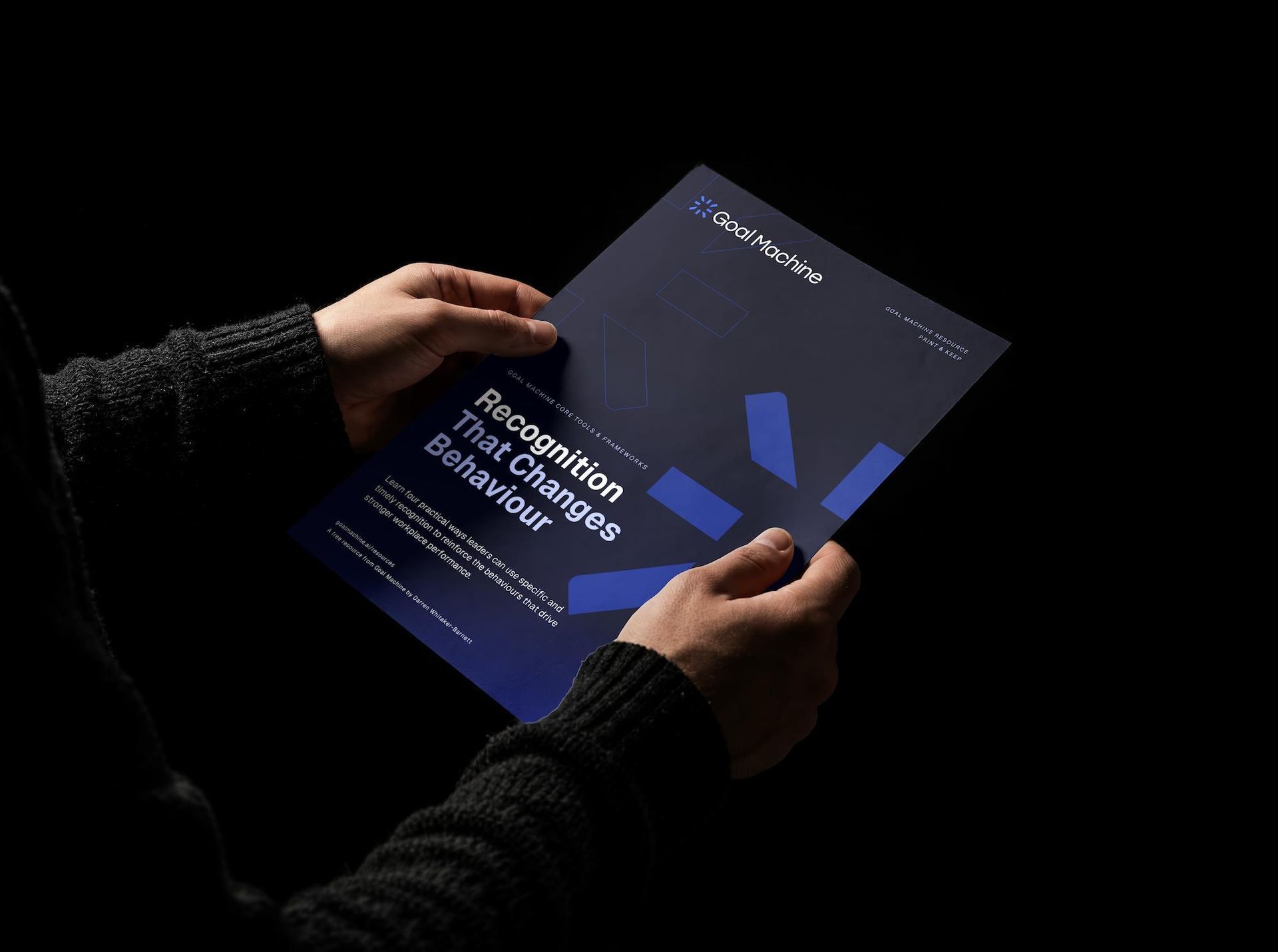
Goal Machine Recognition That Changes Behaviour resource cover
By Ashika Clarke August 14, 2026
Learn four practical ways leaders can use specific and timely recognition to reinforce the behaviours that drive stronger workplace performance.
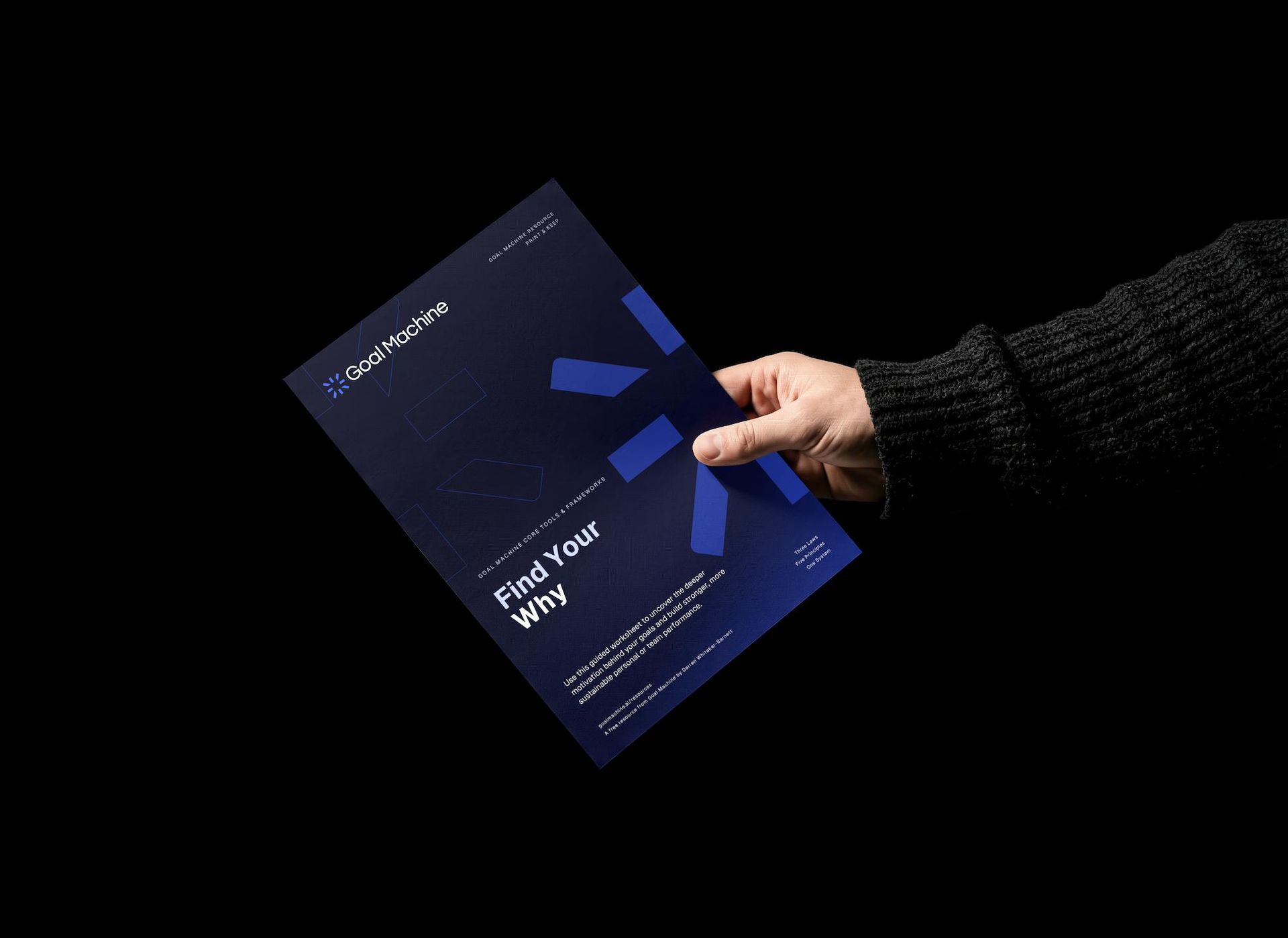
Goal Machine Find Your Why resource cover
By Ashika Clarke August 14, 2026
Use this guided worksheet to uncover the deeper motivation behind your goals and build stronger, more sustainable personal or team performance.
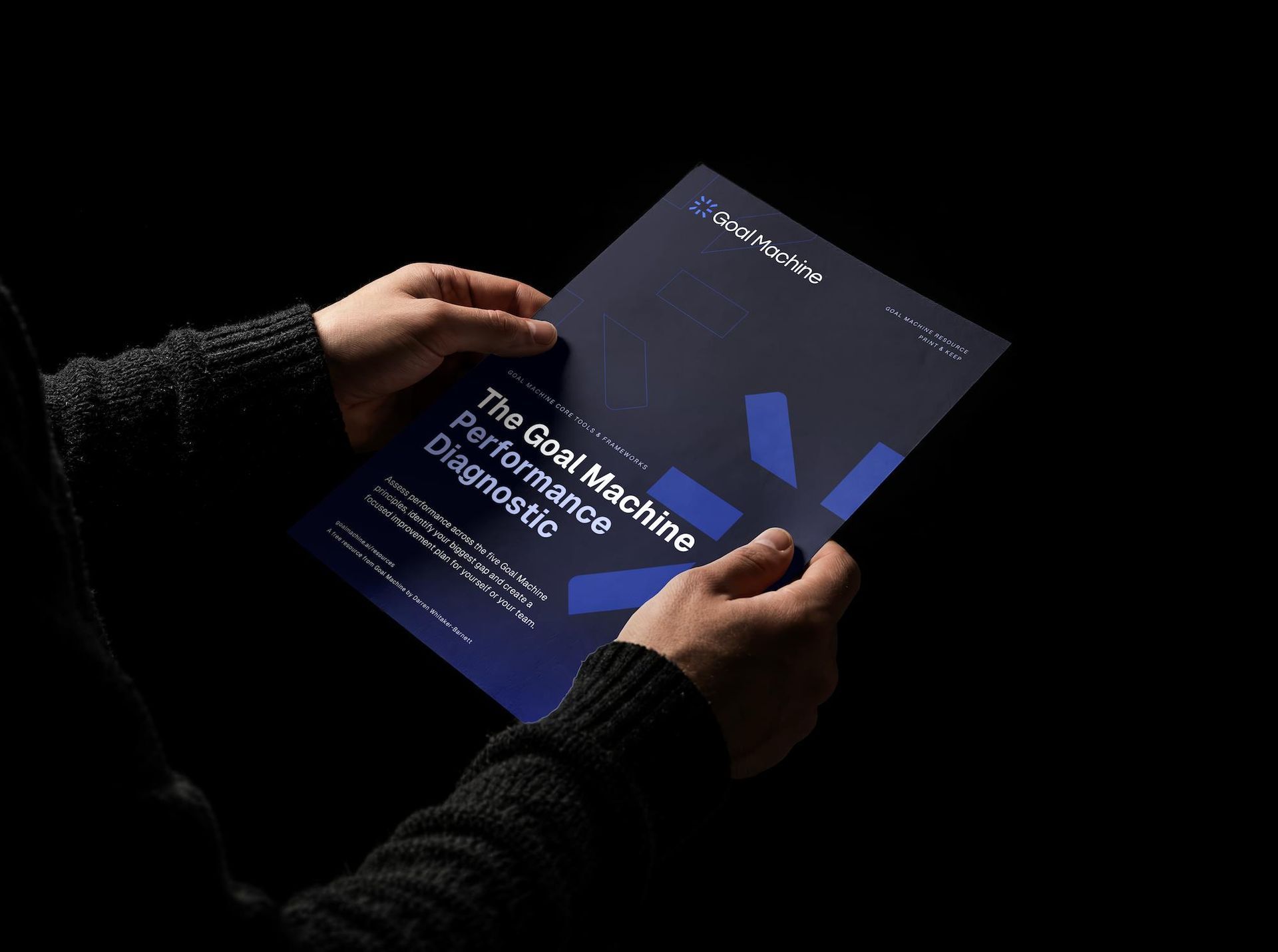
Goal Machine Performance Diagnostic resource cover
By Ashika Clarke August 14, 2026
Assess performance across the five Goal Machine principles, identify your biggest gap and create a focused improvement plan for yourself or your team.
Goal Machine Five Principles Reference Guide resource cover
By Ashika Clarke August 14, 2026
Explore Direction, Why, How, Competence and Recognition, including the science, leader questions and Three Laws of the Goal Machine.
Show More