10 Growth Goals to Master in Marketing

Free Printable Download

Download the free printable version of this resource and start putting your goals into action. Simply scroll to this bottom of the page to download.

Share

Free Resource · Marketing

10 Growth Goals to Master

Marketing

Future-proof your career. Build skills that are genuinely difficult to replace.

A free resource from Goal Machine by Darren Whitaker-Barnett

Introduction

Purpose

Ten growth goals for marketing professionals who want to move from executing campaigns to driving strategy — with daily practices that develop the commercial judgment, creative leadership, and data fluency that separate genuine marketing leaders from content producers.

Daily Practice 90 Days Mastery

The Principles They Serve

Competence (Am I getting better?) and Law 2 (What you do daily becomes what you achieve repeatedly) are the primary architecture. Direction and Why are present throughout — growth goals require a clear destination and a personal reason strong enough to sustain 90 days of deliberate daily practice.

Direction
GOAL-SETTING THEORY
Why
IKIGAI
How
KAIZEN
Competence
SELF-DETERMINATION THEORY
Recognition
COGNITIVE EVALUATION THEORY
Introduction

From the Author

When we were building WhosOnLocation, my previous startup, with limited capital, marketing was not a department — it was a discipline that every leader had to understand. We could not outspend our competitors on advertising. We had to out-think them. That meant being deeply precise about who we were selling to, what mattered to them, and how to reach them in a way that felt relevant rather than intrusive.

The marketing professionals I most respected during that period were not the ones who produced the most content. They were the ones who understood the commercial mechanics of the business, could trace their activity to revenue, and could build a strategy from first principles rather than from last quarter's playbook. Those capabilities — strategic thinking, commercial acumen, genuine audience insight — are the ones no automation will ever fully replace. This resource is about building them deliberately.

— Darren Whitaker-Barnett

The New Reality

The New Reality for This Function

AI tools are generating campaign copy, social content, ad variations, and basic visual assets at a fraction of the previous cost. Programmatic advertising is reducing the need for manual campaign management. The marketing professionals who remain irreplaceable are those who bring genuine strategic judgment, creative direction, audience insight, and the commercial thinking that transforms marketing activity into measurable business growth.

These ten growth goals develop the capabilities that position a marketing professional as a strategic growth driver rather than a content producer. They require commercial judgment, creative leadership, and data fluency that AI tools can assist but not replace.

These are not performance goals — goals to help you do your current job better. They are growth goals: skills to develop that compound over time, make you genuinely difficult to replace, and open doors that narrow for those who do not build them. Each one requires human judgment, improves with experience, and cannot be easily automated or offshored. The daily practices are designed to fit a working life — 15 to 30 minutes each day, consistently applied over 90 days, creates measurable progress toward mastery.

The 10 Growth Goals

Marketing

01
Direction

Growth Strategy and Go-to-Market Design

01 / 10
Why Master This Now

The ability to design a complete go-to-market strategy — market segmentation, positioning, channel selection, and revenue modelling — is the highest-value skill in marketing and the least commonly developed.

What Mastery Looks Like

You can build a complete GTM strategy for a new product or market from scratch — with clear positioning, a defined ICP, channel rationale, and a revenue model — and present it persuasively to a leadership team.

Daily Practice
  • Spend 20 minutes each morning studying one GTM case study, strategic marketing framework, or market positioning example — build your strategic vocabulary deliberately.
  • Write a one-page GTM analysis for one of your company's products or customer segments each month — practise strategic thinking even when no one has asked for it.
02
Competence

Brand Strategy and Positioning

02 / 10
Why Master This Now

In a world of content abundance, brand is the only sustainable differentiator. Marketers who can define, protect, and evolve a brand position — and make it coherent across every touchpoint — are genuinely scarce.

What Mastery Looks Like

You can articulate your brand's positioning clearly and specifically, identify when executions are on or off brand, and contribute meaningfully to brand strategy decisions at a senior level.

Daily Practice
  • Analyse one competitor's brand positioning each week — what are they standing for, what are they avoiding, and what gap does that leave in the market?
  • Study one brand case study each month — a brand that changed direction, a challenger brand that won, a heritage brand that stayed relevant — and extract one transferable lesson.
03
Competence

Marketing Analytics and Revenue Attribution

03 / 10
Why Master This Now

Marketers who can connect their activity to revenue — through robust attribution modelling, funnel analysis, and financial fluency — earn a seat at the growth table that activity-focused marketers never reach.

What Mastery Looks Like

You can build a multi-touch attribution model, interpret pipeline contribution data, calculate marketing ROI, and present the commercial impact of marketing investment in a language that CFOs understand.

Daily Practice
  • Spend 20 minutes each morning on one analytics skill — attribution modelling, SQL for marketing data, or Google Analytics 4 — through a structured learning programme.
  • Build or improve one marketing attribution report each week — the goal is not a perfect model, but a progressively more accurate one.
04
How

AI-Augmented Marketing Strategy

04 / 10
Why Master This Now

Marketers who understand how to use AI tools strategically — to amplify creative judgment, not replace it — will outperform those who either ignore AI or defer to it uncritically.

What Mastery Looks Like

You use AI tools deliberately and selectively across your marketing work, can articulate clearly what AI should and should not be trusted to do, and produce work that is enhanced by AI rather than diluted by it.

Daily Practice
  • Spend 20 minutes each morning exploring one AI marketing tool or capability — not as a novelty, but with a specific question: what does this enable that I could not do before?
  • Review one piece of AI-generated content each week against what you would have produced — where did the tool help, where did it miss, and what does that tell you about where to apply it?
05
Why

Customer Research and Audience Insight

05 / 10
Why Master This Now

The marketers who produce work that lands are the ones who understand their audience at a level that goes beyond demographics. Genuine insight — into motivations, language, fears, and decision-making — cannot be produced by a tool. It has to be earned.

What Mastery Looks Like

You conduct regular qualitative research with customers and prospects, produce insight documents that change how your team talks about the audience, and are the person others come to when they need to understand what the customer actually thinks.

Daily Practice
  • Conduct one customer or prospect conversation each week — not a sales call, but a genuine research conversation. What do they care about? What language do they use? What do they fear?
  • Write a one-page audience insight summary each month from your research — what is changing in how your audience thinks, and what does that mean for how we communicate?
06
Direction

Product Marketing and Positioning Strategy

06 / 10
Why Master This Now

Product marketing — the discipline of positioning a product for a specific audience, building the narrative that makes it compelling, and enabling the sales team to tell the story — is one of the most commercially valuable skills in marketing.

What Mastery Looks Like

You can develop and own the positioning for a product or feature from scratch: the audience, the problem, the differentiation, the message, and the sales enablement that makes it land.

Daily Practice
  • Write a positioning brief for one product or feature each quarter — even if it already has one. The discipline of starting from scratch develops the skill.
  • Spend 20 minutes each week reading product marketing case studies — how did this company position this product, what worked, what would you have done differently?
07
How

Community Building and Audience Development

07 / 10
Why Master This Now

Owned audiences — communities, newsletters, loyal followings — are the most durable marketing asset a company can build. The marketers who know how to grow them are increasingly rare and increasingly valuable.

What Mastery Looks Like

You have built or significantly grown an owned audience for your organisation — a newsletter, a community, a content programme — that generates measurable business value independently of paid channels.

Daily Practice
  • Spend 20 minutes each morning on deliberate community or audience building — a genuinely useful piece of content, a meaningful interaction, an invitation that expands the circle.
  • Study one community or audience development case study each month — what made it grow, what made it valuable, and what would you replicate?
08
Competence

Commercial Acumen and Financial Literacy

08 / 10
Why Master This Now

Marketers who understand unit economics, LTV:CAC ratios, contribution margin, and EBITDA earn a fundamentally different level of credibility and influence with leadership than those who report on impressions and engagement rates.

What Mastery Looks Like

You can calculate the marketing ROI for any initiative, understand how marketing spend flows through the P&L, and present marketing decisions in financial terms that the CFO and CEO take seriously.

Daily Practice
  • Spend 20 minutes each morning on financial literacy — reading the financial press with a marketing lens, studying unit economics, or working through a financial modelling course.
  • Calculate the ROI for one past marketing initiative each week — even retrospectively. The discipline of quantification changes how you plan future investments.
09
How

Integrated Campaign Thinking

09 / 10
Why Master This Now

The ability to design a campaign that works coherently across channels — where every touchpoint reinforces the same message, reaches the audience at the right moment, and builds toward a single commercial outcome — is rarer than it should be.

What Mastery Looks Like

You can design and brief an integrated campaign from strategy to execution, understand how each channel contributes to the whole, and manage the campaign's performance with a unified view rather than channel-by-channel reporting.

Daily Practice
  • Map one past campaign each month as an integrated view — which channels ran, how they connected, where the handoffs broke down, and what you would do differently.
  • Study one integrated campaign case study each month — a brand that executed brilliantly across channels — and extract one transferable principle.
10
Recognition

Leadership and Creative Direction

10 / 10
Why Master This Now

The marketing leaders who build great teams are not the ones who do everything themselves — they are the ones who can give creative direction that elevates others' work, recognise great thinking when they see it, and build an environment where the best ideas surface.

What Mastery Looks Like

You can brief a creative team in a way that produces distinctive, on-strategy work consistently, give feedback that makes work better without making it yours, and build a team culture where people bring their best creative thinking.

Daily Practice
  • Before every creative briefing, write the single most important thing you want someone to feel or do as a result of this work — one sentence. Let that sentence drive everything.
  • After every piece of creative work your team produces, give one specific piece of feedback that addresses the strategy, not the execution. Build the discipline of leading from the brief.
Using This Resource

How to Use This Resource

1

These are not goals to pursue all at once. Choose one or two that represent the largest gap between where you are and where you want to be. Commit to 90 days of deliberate daily practice — 15 to 30 minutes each day, consistently applied — before moving to the next.

2

Use the 90-Day Goal Planning Template (available at goalmachine.ai/resources) to set your chosen growth goal formally: write the goal, define your daily practice, identify your biggest obstacle, and set a six-week review date.

3

For leaders: share this resource with your team at the start of each year. Ask each person to identify one growth goal they will commit to for the coming twelve months. Build it into your regular one-to-one conversations. The people who grow fastest are the ones whose growth is visible and supported — not private and solitary.

A Final Note

At WhosOnLocation, we competed against companies with dramatically more marketing resource by being more precise — about the audience, the message, and the commercial mechanics of what we were doing. The second law of Goal Machine states that what you do daily becomes what you achieve repeatedly. The marketing professionals who build genuine strategic value do it through daily study, consistent practice, and the discipline of connecting every activity to a commercial outcome. The goals in this resource provide the direction. The daily practices are the system that builds the capability.

Explore More Resources

Looking for more tools, guides and inspiration? Explore our full collection of resources designed to help you set meaningful goals, build better habits and keep moving forward.

Goal Machine Recognition That Changes Behaviour resource cover
By Ashika Clarke August 14, 2026
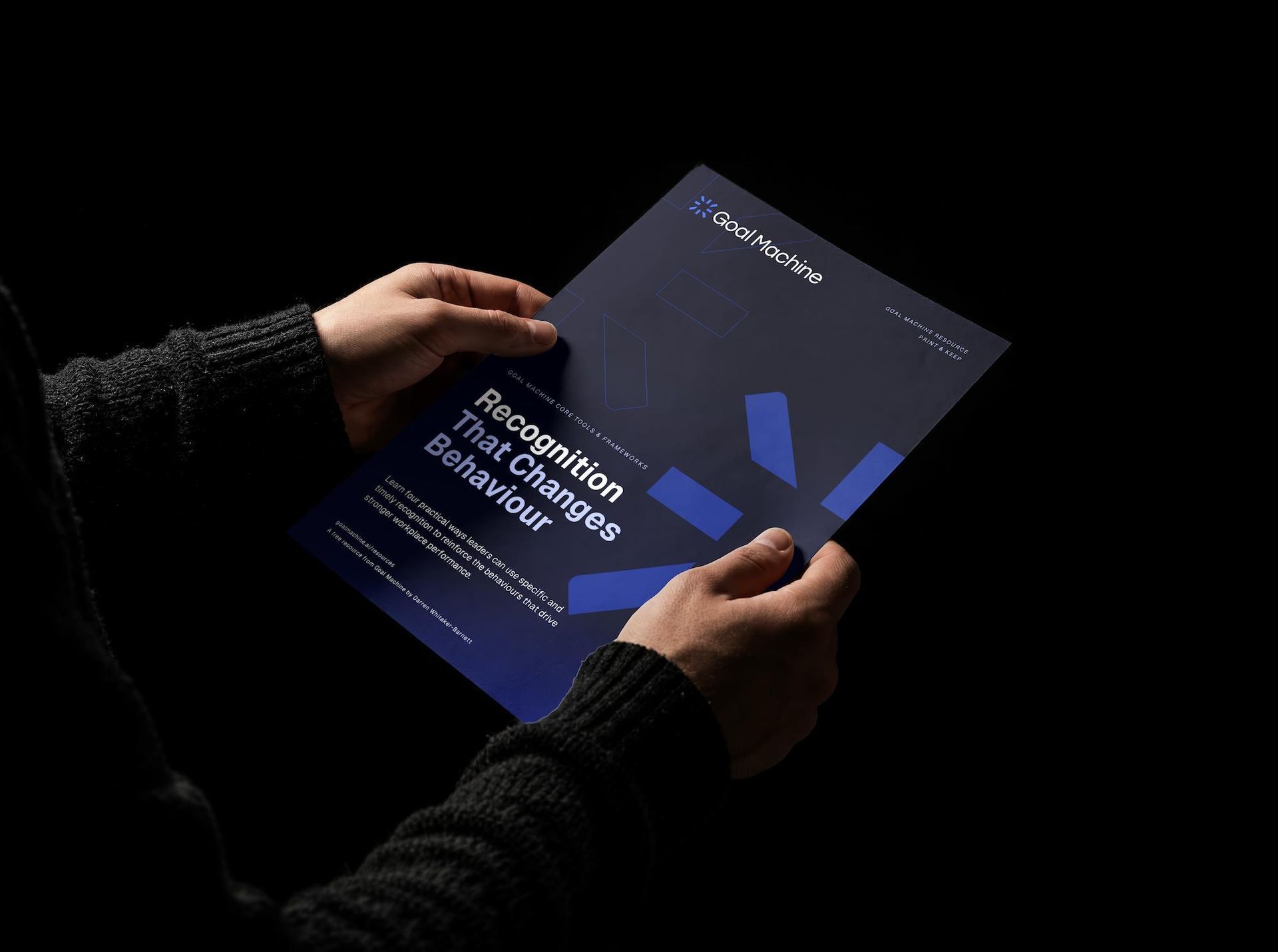
Learn four practical ways leaders can use specific and timely recognition to reinforce the behaviours that drive stronger workplace performance.
Goal Machine Find Your Why resource cover
By Ashika Clarke August 14, 2026
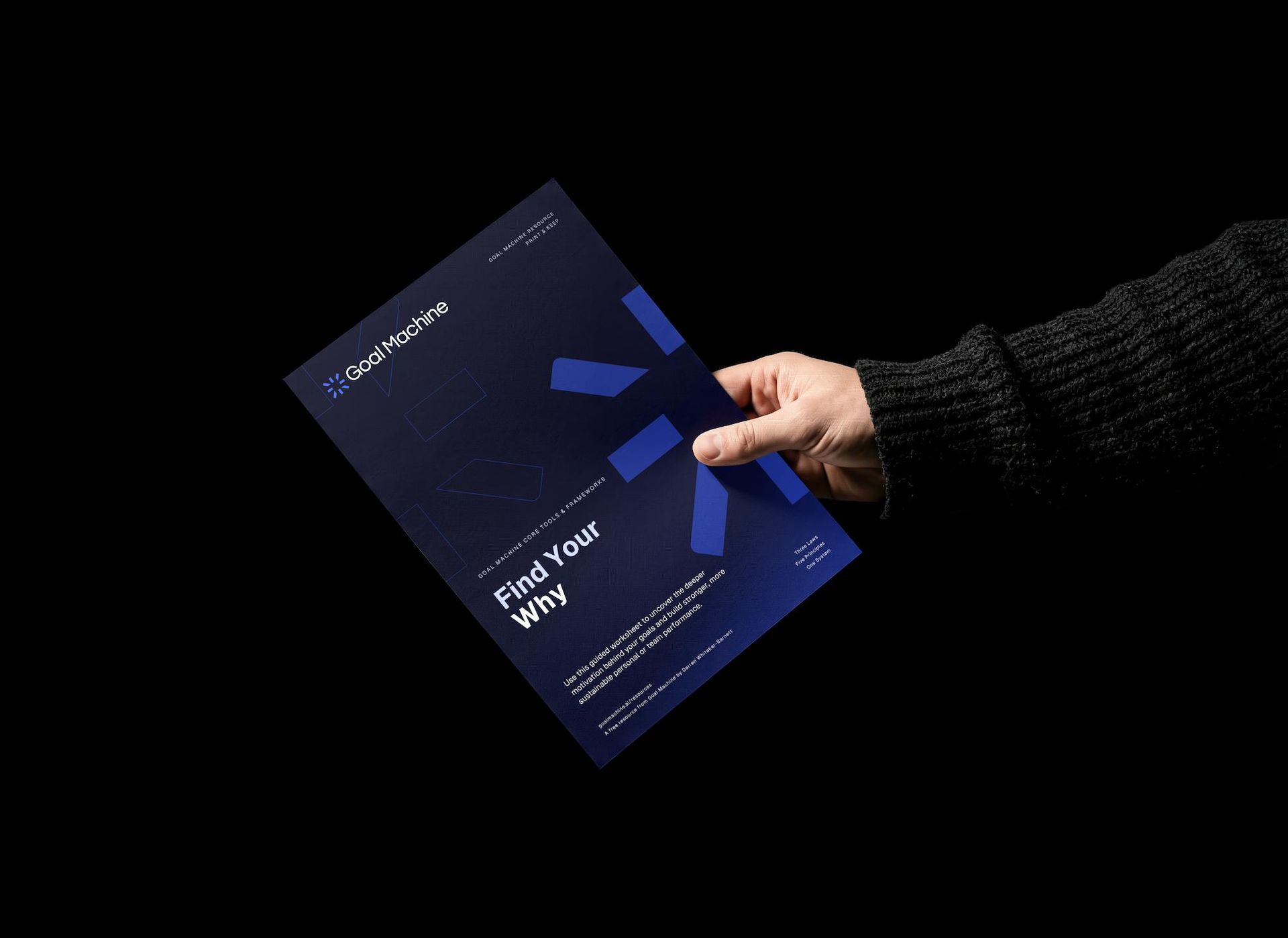
Use this guided worksheet to uncover the deeper motivation behind your goals and build stronger, more sustainable personal or team performance.
Goal Machine Performance Diagnostic resource cover
By Ashika Clarke August 14, 2026
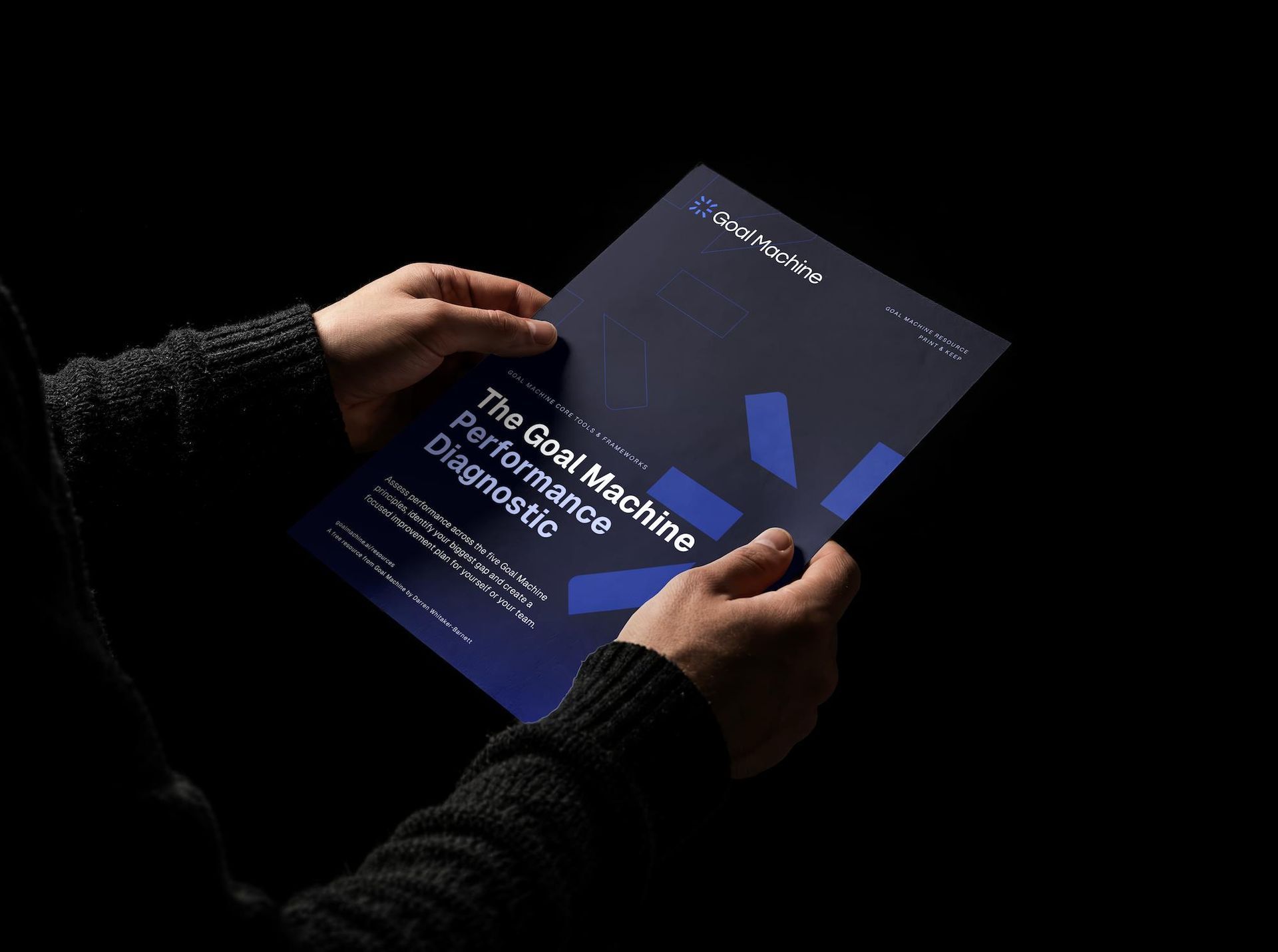
Assess performance across the five Goal Machine principles, identify your biggest gap and create a focused improvement plan for yourself or your team.
Goal Machine Five Principles Reference Guide resource cover
By Ashika Clarke August 14, 2026
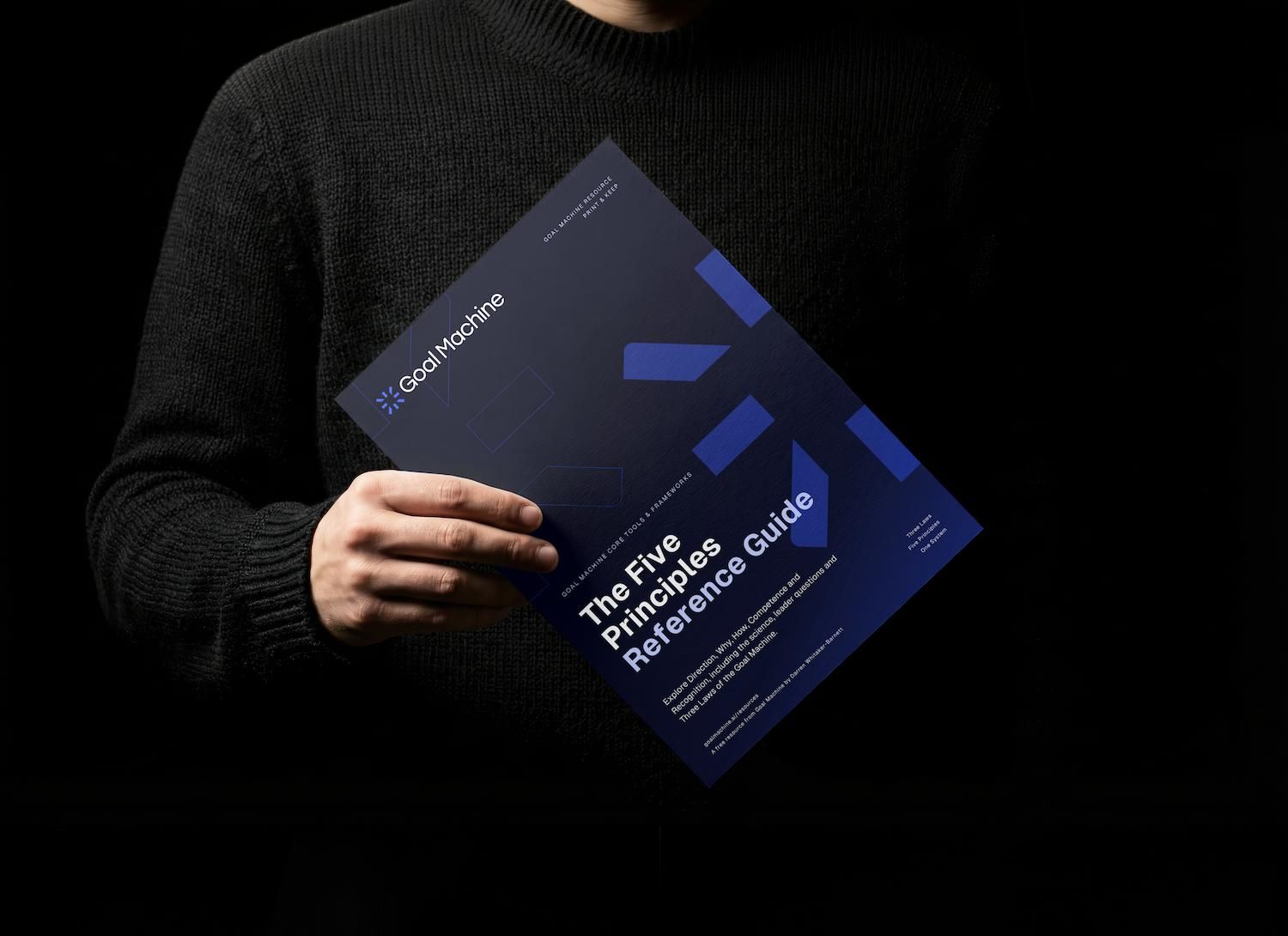
Explore Direction, Why, How, Competence and Recognition, including the science, leader questions and Three Laws of the Goal Machine.
Show More