10 Growth Goals to Master in Customer Support & Success

Free Printable Download

Download the free printable version of this resource and start putting your goals into action. Simply scroll to this bottom of the page to download.

Share

Free Resource · Customer Support & Success

10 Growth Goals to Master

Customer Support & Success

Future-proof your career. Build skills that are genuinely difficult to replace.

A free resource from Goal Machine by Darren Whitaker-Barnett

Introduction

Purpose

Ten growth goals for customer support and success professionals who want to build the skills that transform them from ticket-closers into strategic partners — with daily practices that develop the human capabilities no automation can replicate.

Daily Practice 90 Days Mastery

The Principles They Serve

Competence (Am I getting better?) and Law 2 (What you do daily becomes what you achieve repeatedly) are the primary architecture. Direction and Why are present throughout — growth goals require a clear destination and a personal reason strong enough to sustain 90 days of deliberate daily practice.

Direction
GOAL-SETTING THEORY
Why
IKIGAI
How
KAIZEN
Competence
SELF-DETERMINATION THEORY
Recognition
COGNITIVE EVALUATION THEORY
Introduction

From the Author

When we built WhosOnLocation, our customer support and success team were not just problem-solvers. They were the human face of everything we had promised during the sale. Every interaction they had shaped whether a customer renewed, expanded, or left. I saw that clearly — and I invested in those people accordingly.

The best support and success professionals I have ever worked with shared one quality: they made customers feel genuinely understood, not just processed. That is not a soft skill. It is a rare and learnable capability that takes years to develop — and that no AI, however sophisticated, can authentically replicate. The ten goals in this resource are about building that capability deliberately. Not faster resolution times. Not higher ticket volumes. Genuine, lasting, human value that compels customers to stay.

— Darren Whitaker-Barnett

The New Reality

The New Reality for This Function

First-line support for routine issues is being automated at pace. AI chatbots, self-service knowledge bases, and automated resolution workflows are handling an increasing proportion of inbound volume. The support and success professionals who thrive in 2026 are those who handle what AI cannot: emotional complexity, relationship management, strategic customer partnership, and the judgment required to navigate situations that have never been seen before.

These ten growth goals develop the skills that make a support or success professional genuinely irreplaceable — not just faster or more efficient, but more human, more strategic, and more deeply embedded in the customer relationship than any technology can replicate.

These are not performance goals — goals to help you do your current job better. They are growth goals: skills to develop that compound over time, make you genuinely difficult to replace, and open doors that narrow for those who do not build them. Each one requires human judgment, improves with experience, and cannot be easily automated or offshored. The daily practices are designed to fit a working life — 15 to 30 minutes each day, consistently applied over 90 days, creates measurable progress toward mastery.

The 10 Growth Goals

Customer Support & Success

01
Direction

Strategic Customer Success Management

01 / 10
Why Master This Now

The shift from reactive support to proactive success management is accelerating. Professionals who can manage a customer portfolio strategically — anticipating needs, driving adoption, and connecting customer outcomes to business value — are in high demand.

What Mastery Looks Like

You manage your customer portfolio with a 90-day strategic plan for each account, proactively identifying risks and opportunities before they surface in a support ticket.

Daily Practice
  • Review your customer portfolio each Monday with one question: which account needs proactive attention this week before it becomes a problem?
  • Build and update a one-page account plan for each of your top five customers — direction, current health, next milestone, and your action for this week.
02
Competence

Data-Driven Customer Health Scoring

02 / 10
Why Master This Now

Support professionals who can interpret usage data, engagement signals, and behavioural patterns to predict customer health are building a skill that bridges support and business intelligence.

What Mastery Looks Like

You track and interpret product usage data for your accounts, can identify early churn signals at least 60 days before renewal, and take proactive action based on what the data shows.

Daily Practice
  • Spend 15 minutes each morning reviewing customer health data for your accounts — usage trends, login frequency, feature adoption.
  • Study one customer analytics concept or tool each week and apply it to a real account in your portfolio.
03
Competence

Difficult Conversation Mastery

03 / 10
Why Master This Now

As AI handles routine interactions, the conversations that land in human hands are increasingly complex and emotionally charged. The ability to navigate difficult conversations with composure, empathy, and effectiveness is a career-defining skill.

What Mastery Looks Like

You can manage any difficult customer interaction — escalations, complaints, disappointments, delivery failures — in a way that preserves the relationship and often strengthens it.

Daily Practice
  • After every difficult interaction, spend five minutes writing: what was the emotional dynamic, how did you manage it, and what would you do differently?
  • Study one aspect of difficult conversation management each week — de-escalation, empathy under pressure, managing expectations — and apply it deliberately.
04
Why

Voice of the Customer Translation

04 / 10
Why Master This Now

The support professional who can translate customer feedback into product insight — who can take what customers are saying and help the product team hear what they actually mean — becomes indispensable across the organisation.

What Mastery Looks Like

You produce regular, structured voice-of-customer reports that product and leadership teams actively use to make decisions, and you are sought out as a customer intelligence resource, not just a problem-solver.

Daily Practice
  • After every significant customer interaction, write one sentence: what did this tell us about what the customer actually needs that we are not yet delivering?
  • Compile and share a weekly customer insight summary with your product or leadership team — not a complaint log, but a structured view of patterns.
05
Direction

Executive Relationship Management

05 / 10
Why Master This Now

The ability to build and maintain relationships with senior stakeholders at your key accounts — not just the day-to-day contacts — protects retention, accelerates expansion, and creates a fundamentally different level of partnership.

What Mastery Looks Like

You have an active relationship with at least one senior executive at each of your top five accounts, hold quarterly executive business reviews, and are the person they call when something important changes.

Daily Practice
  • Identify the senior executive sponsor at each of your top accounts and take one deliberate action each week to strengthen that relationship.
  • Prepare and deliver one executive business review each month — even for accounts that have not requested one. The ones that get them are the ones that stay.
06
Competence

Product Expertise and Technical Depth

06 / 10
Why Master This Now

The support professional who knows the product more deeply than anyone outside the product team becomes the person everyone — customers, sales, and leadership — goes to when they need a real answer fast.

What Mastery Looks Like

You can answer any product question without escalation, identify edge cases before they become issues, and contribute meaningfully to product discussions because of what you know from the customer front line.

Daily Practice
  • Spend 20 minutes each morning on deliberate product learning — a feature you do not fully understand, a use case you have not explored, a configuration you have not tested.
  • Write one product knowledge article or FAQ each week — the discipline of explaining forces the depth of understanding.
07
How

Renewal and Expansion Commercial Skills

07 / 10
Why Master This Now

The success professionals who advance are the ones who understand the commercial side of the customer relationship — who can manage a renewal conversation, identify expansion opportunities, and contribute directly to revenue.

What Mastery Looks Like

You can lead a renewal negotiation, identify and qualify an upsell or cross-sell opportunity, and present the commercial case for expansion to both the customer and internal stakeholders.

Daily Practice
  • Study one commercial skill each month — renewal negotiation, value-based pricing, expansion selling — through a structured resource and apply it in a real interaction.
  • Before every renewal, build a one-page account summary: value delivered, usage trends, expansion opportunity, and risk factors.
08
Recognition

Cross-Functional Influence

08 / 10
Why Master This Now

The best support and success professionals do not just serve customers — they improve the organisation's ability to serve customers. That requires influence: with product, with sales, with leadership.

What Mastery Looks Like

You are regularly consulted by product, sales, and leadership for your customer perspective, and you can see tangible changes in the product or business that resulted from your input.

Daily Practice
  • Identify one cross-functional improvement opportunity each week — something that would make the customer experience better if a different team changed something — and bring it to them with evidence.
  • Build relationships with one peer in product and one in sales who you speak with regularly — not to escalate, but to share perspective.
09
How

Digital Customer Experience Design

09 / 10
Why Master This Now

Support professionals who understand how to design digital customer journeys — self-service flows, onboarding sequences, in-product guidance — can shape the experience at scale, not just one interaction at a time.

What Mastery Looks Like

You can audit a customer's digital journey through your product, identify the friction points that drive support volume, and propose specific improvements with a clear rationale.

Daily Practice
  • Spend 20 minutes each week going through your product as a new customer would — document every point of confusion, every missing instruction, every step that could be clearer.
  • Study one digital customer experience principle each month and apply it to one specific part of your customer journey.
10
Why

Resilience and Emotional Sustainability

10 / 10
Why Master This Now

Customer-facing roles carry an emotional load that compounds over time. The professionals who sustain high performance across years — rather than burning out in months — are those who have deliberately built the practices that protect their capacity.

What Mastery Looks Like

You maintain consistent performance quality across difficult periods, have a clear set of practices that protect your emotional energy, and do not lose the quality of your customer interactions when the volume or difficulty increases.

Daily Practice
  • At the end of each working day, write three sentences: what was hard today, what did I handle well, and what do I need to leave at work rather than carry home?
  • Study one aspect of resilience, emotional regulation, or sustainable performance each month and build one practice from it into your daily routine.
Using This Resource

How to Use This Resource

1

These are not goals to pursue all at once. Choose one or two that represent the largest gap between where you are and where you want to be. Commit to 90 days of deliberate daily practice — 15 to 30 minutes each day, consistently applied — before moving to the next.

2

Use the 90-Day Goal Planning Template (available at goalmachine.ai/resources) to set your chosen growth goal formally: write the goal, define your daily practice, identify your biggest obstacle, and set a six-week review date.

3

For leaders: share this resource with your team at the start of each year. Ask each person to identify one growth goal they will commit to for the coming twelve months. Build it into your regular one-to-one conversations. The people who grow fastest are the ones whose growth is visible and supported — not private and solitary.

A Final Note

The third law of Goal Machine states that what gets recognised gets repeated. In customer support and success, the behaviour most worth reinforcing is genuine human connection — the kind that makes a customer feel understood rather than processed. That capability does not develop through efficiency training or ticket management systems. It develops through deliberate daily practice, honest reflection, and the discipline of getting incrementally better at something that is genuinely hard. The goals in this resource point the direction. The daily practices are the system that builds it.

Explore More Resources

Looking for more tools, guides and inspiration? Explore our full collection of resources designed to help you set meaningful goals, build better habits and keep moving forward.

Goal Machine Recognition That Changes Behaviour resource cover
By Ashika Clarke August 14, 2026
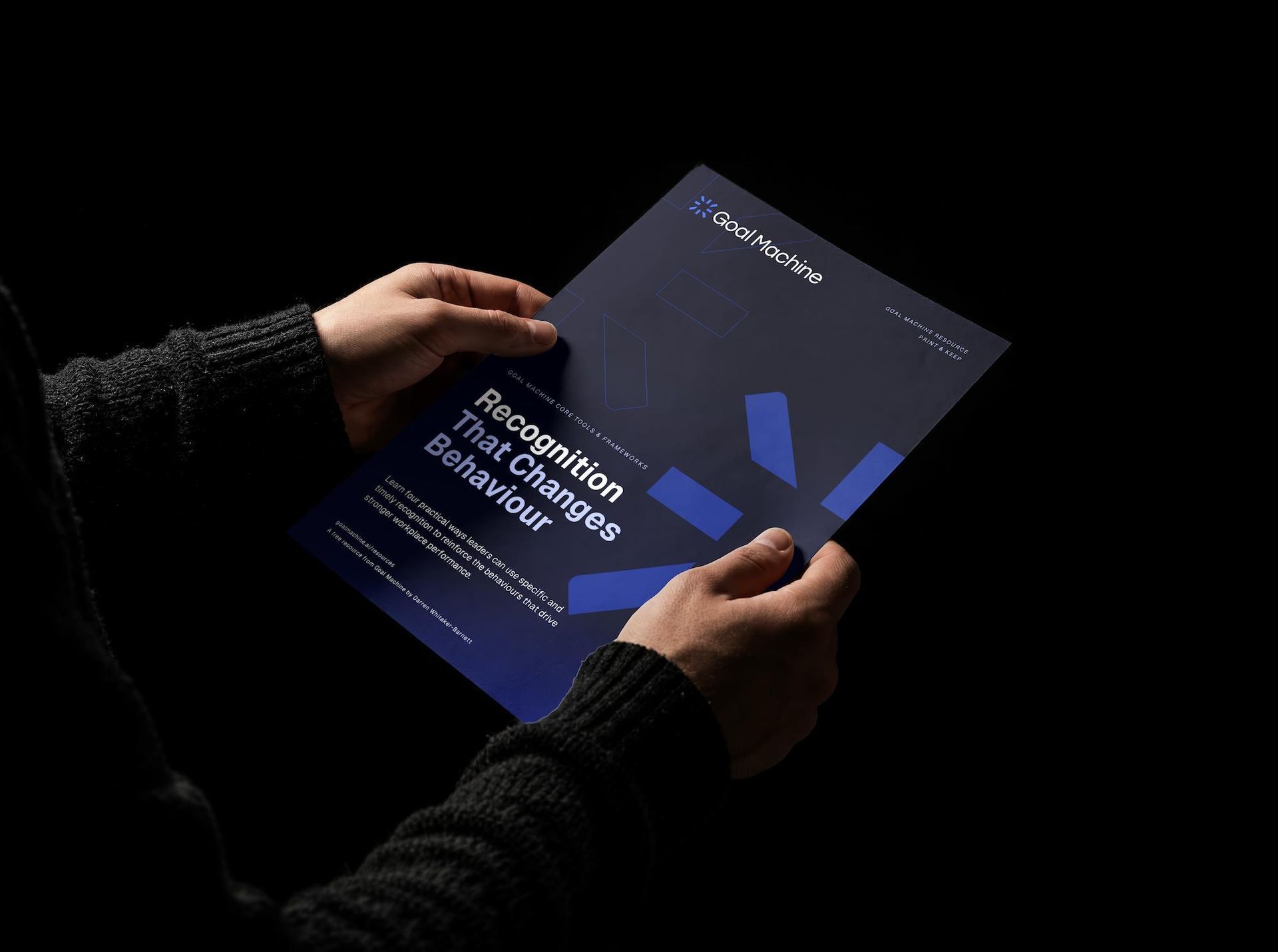
Learn four practical ways leaders can use specific and timely recognition to reinforce the behaviours that drive stronger workplace performance.
Goal Machine Find Your Why resource cover
By Ashika Clarke August 14, 2026
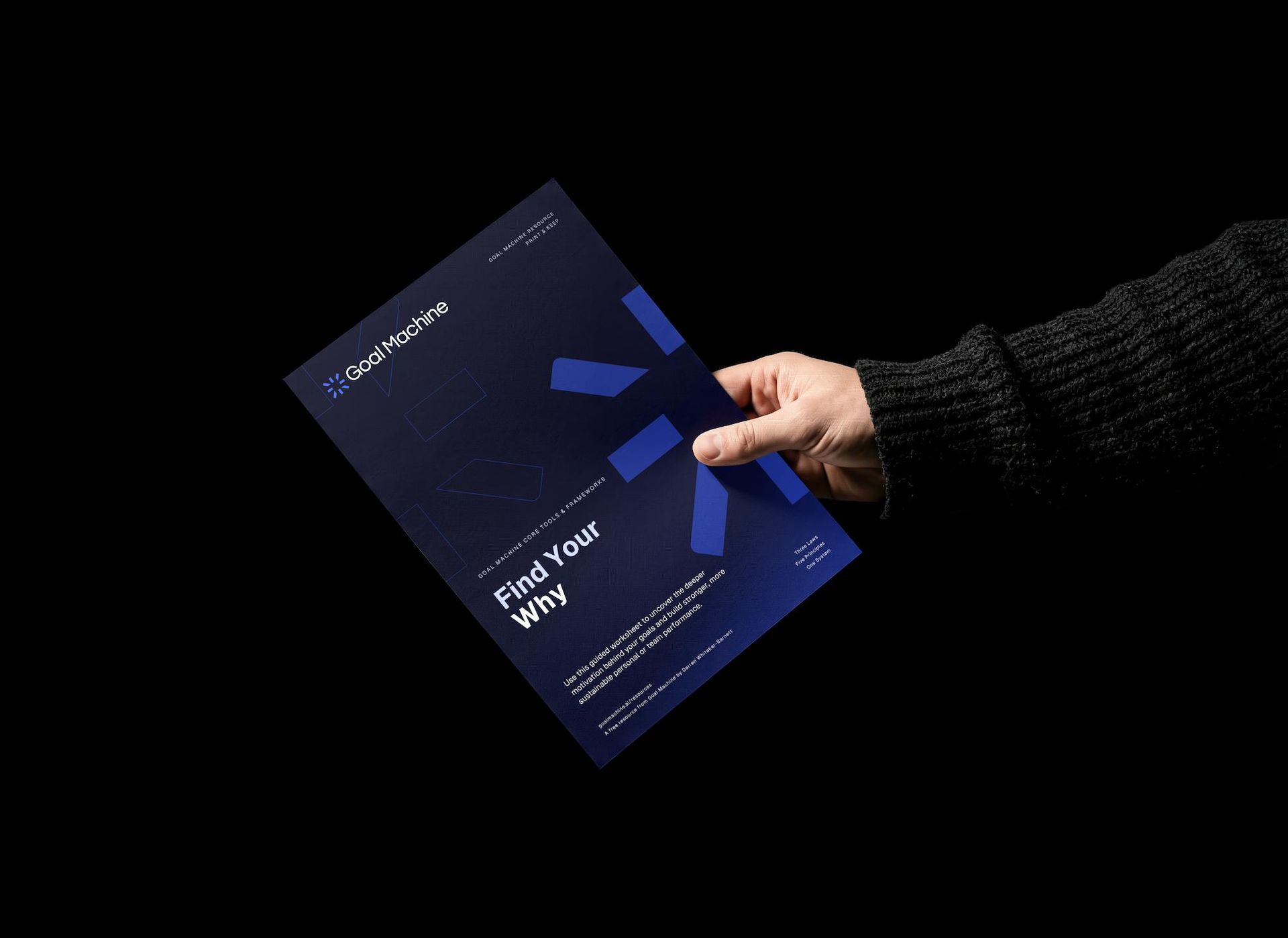
Use this guided worksheet to uncover the deeper motivation behind your goals and build stronger, more sustainable personal or team performance.
Goal Machine Performance Diagnostic resource cover
By Ashika Clarke August 14, 2026
Assess performance across the five Goal Machine principles, identify your biggest gap and create a focused improvement plan for yourself or your team.
Goal Machine Five Principles Reference Guide resource cover
By Ashika Clarke August 14, 2026
Explore Direction, Why, How, Competence and Recognition, including the science, leader questions and Three Laws of the Goal Machine.
Show More