10 Growth Goals to Master in Operations

Free Printable Download

Download the free printable version of this resource and start putting your goals into action. Simply scroll to this bottom of the page to download.

Share

Free Resource · Operations

10 Growth Goals to Master

Operations

Future-proof your career. Build skills that are genuinely difficult to replace.

A free resource from Goal Machine by Darren Whitaker-Barnett

Introduction

Purpose

Ten growth goals for operations professionals who want to move from executing processes to designing systems — with daily practices that build the strategic, analytical, and commercial capabilities that make great operators genuinely irreplaceable.

Daily Practice 90 Days Mastery

The Principles They Serve

Competence (Am I getting better?) and Law 2 (What you do daily becomes what you achieve repeatedly) are the primary architecture. Direction and Why are present throughout — growth goals require a clear destination and a personal reason strong enough to sustain 90 days of deliberate daily practice.

Direction
GOAL-SETTING THEORY
Why
IKIGAI
How
KAIZEN
Competence
SELF-DETERMINATION THEORY
Recognition
COGNITIVE EVALUATION THEORY
Introduction

From the Author

Building my last startup to establish customers in forty-two countries meant that operational excellence was never optional. With limited capital and a small team serving ten thousand facilities globally, every process had to work — reliably, at scale, without constant intervention. What I learned is that great operations is not about compliance. It is about design. The people who made the biggest difference were the ones who could look at how work was being done and ask: why does it work this way, what would make it better, and what would it take to change it?

That kind of thinking — strategic, system-oriented, commercially grounded — is what separates the operations professionals who shape organisations from those who service them. The ten goals in this resource are about developing that capability deliberately. Not as a project. As a daily practice that compounds over time into genuine strategic value.

— Darren Whitaker-Barnett

The New Reality

The New Reality for This Function

Routine operational processes — scheduling, basic logistics, data entry, standard reporting — are being automated at scale. Offshore operations teams are handling increasingly complex workflows as remote coordination tools improve. The operations professionals who remain irreplaceable are those who combine deep process expertise with strategic thinking, technology fluency, and the organisational influence to drive change that actually sticks.

These ten growth goals develop the capabilities that transform an operations professional from a process executor into a strategic business architect — someone who designs the systems that make the organisation more capable, efficient, and resilient.

These are not performance goals — goals to help you do your current job better. They are growth goals: skills to develop that compound over time, make you genuinely difficult to replace, and open doors that narrow for those who do not build them. Each one requires human judgment, improves with experience, and cannot be easily automated or offshored. The daily practices are designed to fit a working life — 15 to 30 minutes each day, consistently applied over 90 days, creates measurable progress toward mastery.

The 10 Growth Goals

Operations

01
Competence

Process Excellence and Lean Methodology

01 / 10
Why Master This Now

Operations professionals who have mastered Lean, Six Sigma, or equivalent process improvement methodologies can identify waste, redesign processes, and lead improvement initiatives that create measurable business value.

What Mastery Looks Like

You hold or are progressing toward a Lean or Six Sigma qualification, have led at least two significant process improvement projects, and can train others in the fundamental tools.

Daily Practice
  • Spend 20 minutes each morning on your Lean or Six Sigma certification — build the theoretical foundation before applying it in practice.
  • Identify one process in your current role each week and map it using a Lean tool — value stream mapping, 5 Whys, or a process flow diagram — to develop your analytical habit.
02
Direction

Technology and Automation Strategy

02 / 10
Why Master This Now

Operations professionals who can evaluate, select, and implement technology and automation solutions — not just use them — are the ones who lead the transformation others follow.

What Mastery Looks Like

You can assess an operational challenge, identify the technology or automation approach most likely to solve it, build the business case, and lead the implementation.

Daily Practice
  • Spend 20 minutes each morning exploring one operations technology — RPA tools, workflow automation platforms, AI for operations — to build your awareness of the landscape.
  • Build the business case for one automation initiative each quarter — even if it is never presented, the discipline of quantifying the opportunity develops your commercial thinking.
03
Competence

Supply Chain and Vendor Ecosystem Thinking

03 / 10
Why Master This Now

Global supply chain disruption has elevated the value of operations professionals who can think systemically about supplier relationships, risk concentration, and resilience design.

What Mastery Looks Like

You understand your organisation's critical supplier dependencies, can identify concentration risks, and can design vendor diversification or contingency strategies that reduce operational exposure.

Daily Practice
  • Review your organisation's top five supplier relationships each month — performance, risk, and relationship health — and identify one proactive action for each.
  • Study one supply chain risk management or resilience framework each month and apply its thinking to one aspect of your current operational environment.
04
Competence

Data-Driven Operations and Analytics

04 / 10
Why Master This Now

Operations professionals who can build and interpret performance dashboards, identify leading indicators of process failure, and use data to drive decisions operate at a fundamentally different level from those who rely on end-of-period reporting.

What Mastery Looks Like

You have built at least one operational performance dashboard that leadership actively uses, can identify process failure signals before they become business problems, and present operational recommendations in data-backed terms.

Daily Practice
  • Spend 20 minutes each morning on analytics or data skills relevant to operations — SQL, Power BI, operational research methods.
  • Build or improve one operational metric or dashboard each month — not to report on the past, but to provide early warning of future performance.
05
Recognition

Strategic Stakeholder Management

05 / 10
Why Master This Now

Operations touches every function. The professionals who are most effective are those who can manage relationships across the organisation — earning the trust of sales, finance, engineering, and leadership — so that operational improvements actually happen.

What Mastery Looks Like

You are proactively consulted by leaders across multiple functions before operational decisions are made, and you have a track record of driving cross-functional improvements that stuck.

Daily Practice
  • Identify the three internal stakeholders whose cooperation most determines the success of your current work — and take one deliberate action each week to strengthen each of those relationships.
  • Study one stakeholder management or influence framework each quarter and apply it to a real cross-functional challenge in your current role.
06
Direction

Business Continuity and Resilience Planning

06 / 10
Why Master This Now

The organisations that recover fastest from disruption are the ones whose operations teams planned for it before it happened. Business continuity thinking is no longer optional — and it is still rare.

What Mastery Looks Like

You have developed and tested a business continuity plan for your primary operational functions, can lead an incident response without escalation, and have identified the critical failure modes your organisation is currently exposed to.

Daily Practice
  • Review one operational failure mode each week — what breaks, what causes it, and what would the recovery look like? Document the answer.
  • Conduct one tabletop scenario exercise each quarter — walk through a realistic disruption and identify the gaps in your current continuity plan.
07
Competence

Financial and Commercial Acumen

07 / 10
Why Master This Now

Operations professionals who understand cost structures, unit economics, and the commercial implications of operational decisions earn fundamentally different influence with leadership than those who operate in a budget rather than a P&L mindset.

What Mastery Looks Like

You can calculate the commercial impact of any operational change — in cost, margin, or revenue terms — and present operational recommendations in financial terms that CFO and CEO take seriously.

Daily Practice
  • Spend 20 minutes each morning on financial literacy — unit economics, cost accounting, margin analysis — relevant to your operational context.
  • Calculate the commercial impact of one operational decision each week — not the operational logic, but the financial outcome. Build the discipline of commercial translation.
08
How

Change Leadership and Implementation

08 / 10
Why Master This Now

Operations professionals who can design and lead change — who understand how organisations resist it, how to sequence it, and how to sustain momentum through the difficult middle — are the ones who make operational improvement real rather than theoretical.

What Mastery Looks Like

You can lead a significant operational change from design to full implementation, manage the resistance it encounters, and sustain the improvement beyond the initial transition period.

Daily Practice
  • Study one change management approach each quarter and apply its diagnostic lens to one change currently underway in your operation.
  • Identify the two or three people in your organisation who will most resist your next operational improvement — and engage them before you begin, not after.
09
Why

Sustainability and Responsible Operations

09 / 10
Why Master This Now

Sustainability is increasingly embedded in procurement decisions, regulatory requirements, and stakeholder expectations. Operations professionals who understand how to measure, manage, and improve environmental and social impact are in growing demand.

What Mastery Looks Like

You can measure your organisation's operational carbon footprint, identify the highest-impact reduction opportunities, and build a credible sustainability roadmap with measurable targets.

Daily Practice
  • Spend 20 minutes each morning on sustainability in operations — carbon accounting, circular economy principles, regulatory requirements in your sector.
  • Map one operational process each month for its environmental impact — inputs, outputs, waste, and emissions — and identify one specific improvement.
10
Recognition

Strategic Communication and Executive Presence

10 / 10
Why Master This Now

Operations professionals who can communicate at the strategic level — who can take operational complexity and translate it into the terms that matter to leadership — create a different kind of value from those who report on metrics.

What Mastery Looks Like

You present operational strategy to leadership with confidence and clarity, are asked for your perspective on decisions outside your direct function, and produce written communication that influences decisions rather than just informing them.

Daily Practice
  • Before any significant communication to leadership, write one sentence: what do I want this person to decide or do as a result of receiving this? Let that sentence shape everything.
  • Study one strategic communication principle each month and apply it deliberately in a real leadership interaction.
Using This Resource

How to Use This Resource

1

These are not goals to pursue all at once. Choose one or two that represent the largest gap between where you are and where you want to be. Commit to 90 days of deliberate daily practice — 15 to 30 minutes each day, consistently applied — before moving to the next.

2

Use the 90-Day Goal Planning Template (available at goalmachine.ai/resources) to set your chosen growth goal formally: write the goal, define your daily practice, identify your biggest obstacle, and set a six-week review date.

3

For leaders: share this resource with your team at the start of each year. Ask each person to identify one growth goal they will commit to for the coming twelve months. Build it into your regular one-to-one conversations. The people who grow fastest are the ones whose growth is visible and supported — not private and solitary.

A Final Note

The first law of Goal Machine states that goals set direction, but systems create performance. No one understands that better than a great operations professional. The skills in this resource — process excellence, system design, commercial thinking, change leadership — are the building blocks of the kind of operational system that makes sustained performance inevitable. The second law states that what you do daily becomes what you achieve repeatedly. Build these capabilities fifteen minutes at a time, applied deliberately, reflected on honestly. That is the compound effect of daily practice. And it is the only way these skills are ever really built.

Explore More Resources

Looking for more tools, guides and inspiration? Explore our full collection of resources designed to help you set meaningful goals, build better habits and keep moving forward.

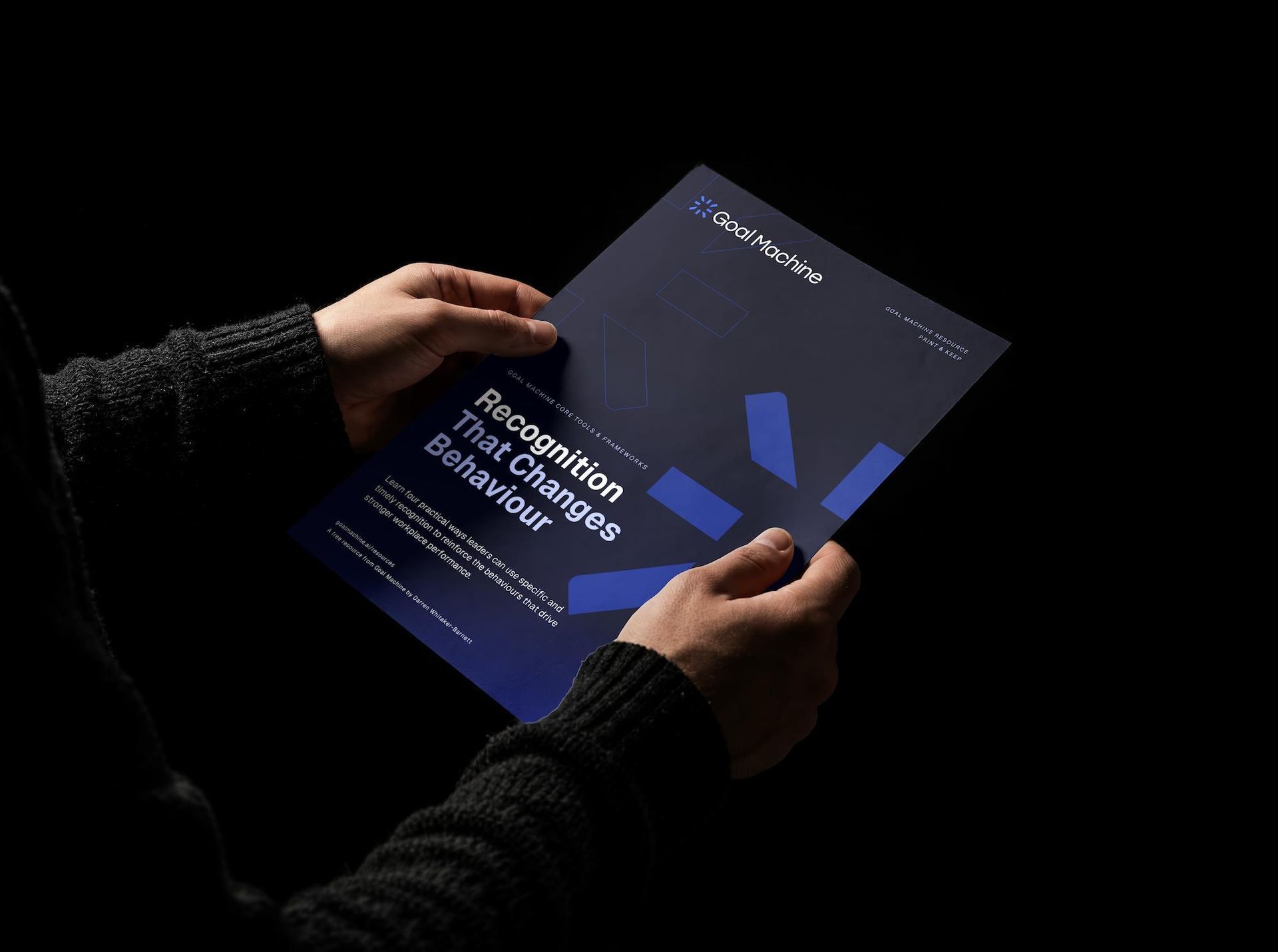
Goal Machine Recognition That Changes Behaviour resource cover
By Ashika Clarke August 14, 2026
Learn four practical ways leaders can use specific and timely recognition to reinforce the behaviours that drive stronger workplace performance.
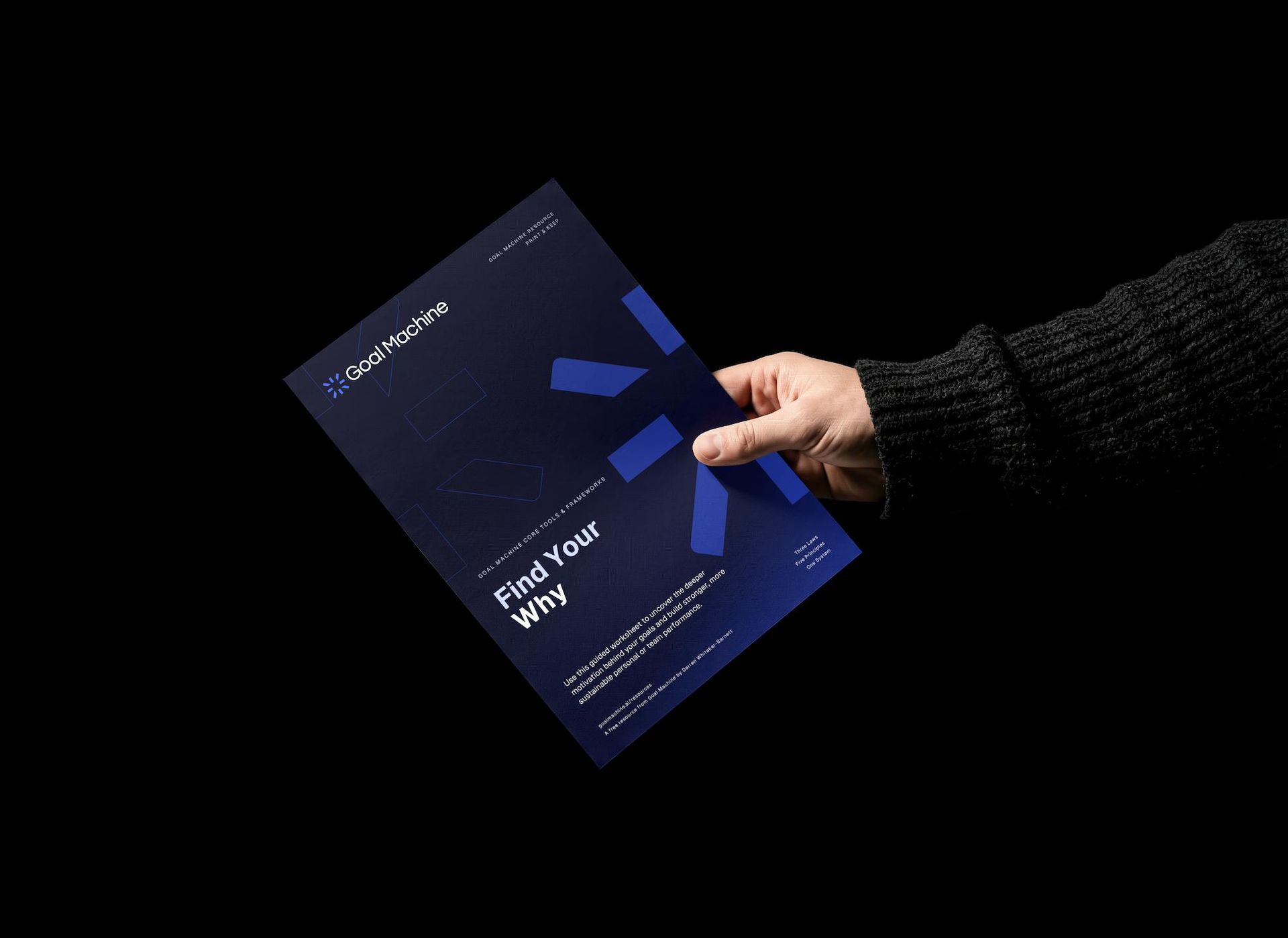
Goal Machine Find Your Why resource cover
By Ashika Clarke August 14, 2026
Use this guided worksheet to uncover the deeper motivation behind your goals and build stronger, more sustainable personal or team performance.
Goal Machine Performance Diagnostic resource cover
By Ashika Clarke August 14, 2026
Assess performance across the five Goal Machine principles, identify your biggest gap and create a focused improvement plan for yourself or your team.
Goal Machine Five Principles Reference Guide resource cover
By Ashika Clarke August 14, 2026
Explore Direction, Why, How, Competence and Recognition, including the science, leader questions and Three Laws of the Goal Machine.
Show More